Colorful Geometric Shapes Digital Papers: A Practical Guide for Designers and Crafters
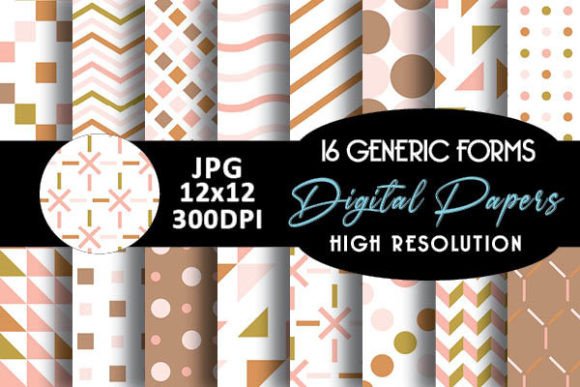
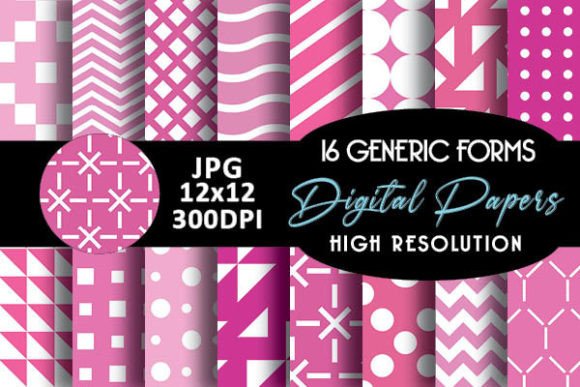
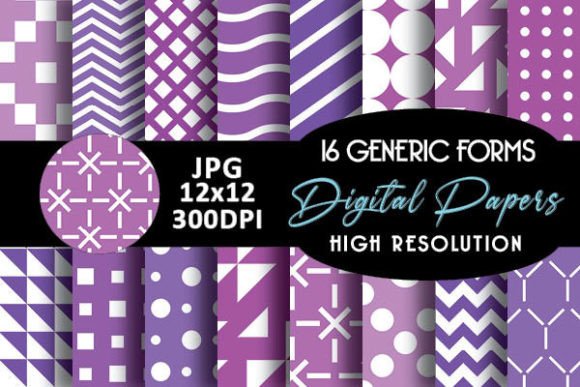
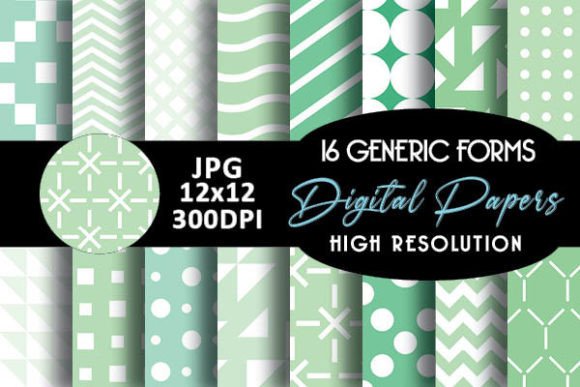
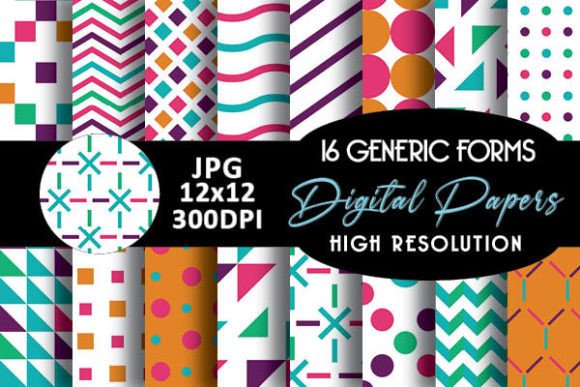
Colorful Geometric Shapes Digital Papers refer to a curated set of 16 high-resolution, printable digital background files—each featuring clean, versatile geometric patterns in vibrant yet balanced color palettes. These are not clipart or isolated icons; they’re seamless, tileable backgrounds designed for real-world creative use. Unlike single-purpose graphics or overly stylized templates, this collection prioritizes adaptability: consistent DPI (300), RGB and CMYK readiness, and compatibility with common design software (Adobe Photoshop, Illustrator, Canva, Cricut Design Space) and print workflows.
What Sets This Collection Apart From Other Geometric Backgrounds
Many digital paper offerings fall into one of two categories: highly themed (e.g., “boho floral,” “vintage script”) or minimal monochrome (e.g., subtle gray triangles). Colorful Geometric Shapes Digital Papers occupies a deliberate middle ground—structured enough to convey modern clarity, expressive enough to support personality-driven projects. The patterns include interlocking hexagons, overlapping circles, asymmetric chevrons, tessellated diamonds, and modulated grids—all rendered with intentional contrast, rhythm, and spacing.
Crucially, the color treatment avoids trend dependency. You won’t find neon gradients or ultra-saturated duotones that date quickly. Instead, each paper uses harmonized triads or analogous schemes—think teal + coral + warm gray, or mustard + slate + ivory—that hold up across screen and print, and pair well with both serif and sans-serif typography. This makes them more enduring than seasonal-themed papers and more engaging than flat-color fills.
How They Compare With Broader Categories of Digital Papers
When evaluating digital papers broadly, users often weigh four dimensions: purpose specificity, technical flexibility, visual tone, and reusability. Here’s where Colorful Geometric Shapes Digital Papers fits in:
- Purpose specificity: Less prescriptive than “baby shower” or “wedding invitation” bundles, but more intentional than generic “abstract texture” packs. These are built for projects where structure and energy matter—like event branding, educational handouts, or product packaging mockups—but don’t lock you into a narrow narrative.
- Technical flexibility: Delivered as individual PNG and JPEG files (no layered PSDs or vector EPS by default), they work immediately in most tools. That’s simpler than SVG-based pattern libraries requiring CSS integration, and lighter than multi-layered design kits with embedded fonts or assets you may never use.
- Visual tone: More grounded than maximalist “kaleidoscope” or “glitch art” backgrounds, and more dynamic than minimalist Scandinavian-inspired papers. They bridge craft warmth and digital precision—ideal when you want visual interest without visual noise.
- Reusability: Because the patterns are generic—not tied to holidays, seasons, or cultural motifs—they scale across contexts. A single paper might serve as a birthday card background, a planner page divider, a fabric print base, or a slide deck texture—without needing reinterpretation or heavy editing.
Real-World Use Cases and Practical Fit
Consider how these papers function in actual workflows:
- Scrapbooking & analog crafts: Printed on cardstock, they cut cleanly with die-cut machines and hold ink well for stamping or hand-lettering. Their consistent scale (no distorted repeats at edges) means collaged elements align predictably.
- Digital invitations and announcements: When layered behind text in Canva or Illustrator, their moderate contrast ensures readability without requiring drop shadows or outlines—unlike some high-contrast geometric patterns that visually compete with typography.
- Educational or organizational tools: Teachers use them for behavior charts or vocabulary cards; planners integrate them into weekly spreads to signal sections (e.g., a diamond-patterned “goals” tab, a chevron “notes” area). The geometry offers subtle visual scaffolding without distraction.
- Small-business branding: A bakery might use a soft hexagon paper for packaging inserts; a tutoring service could apply a muted grid as a background for digital worksheets. The lack of literal imagery keeps focus on content while adding polish.
Tradeoffs and Situations Where Alternatives May Be Better
No resource excels in every context—and understanding limitations helps avoid mismatched expectations.
Colorful Geometric Shapes Digital Papers are intentionally generic. That’s a strength for flexibility, but a limitation if your project requires strong thematic alignment. For example, a Halloween party invitation benefits more from bat-shaped motifs or deep purple/black textures than from a bright coral-and-teal tessellation—even if technically usable. Similarly, if you need editable vectors for scaling to billboard size or customizing individual shapes, a vector-based geometric pattern library would offer more control than raster-based digital papers.
They also assume a baseline level of design comfort. While no advanced skills are required, users who prefer drag-and-drop templates with pre-placed text boxes and photo placeholders may find these papers more open-ended—and therefore require slightly more time to compose layouts thoughtfully.
Another consideration is output medium. These papers shine in print and standard digital displays. However, for interactive web use (e.g., animated backgrounds or responsive CSS tiling), static image files introduce constraints around loading, scaling, and accessibility—where SVG or CSS-generated patterns become more efficient.
Decision Factors: When to Choose—or Skip—This Collection
Ask yourself these practical questions before selecting Colorful Geometric Shapes Digital Papers:
- Do you value consistency across multiple projects? If you’re building a cohesive brand identity or recurring content series (e.g., monthly newsletters, workshop handouts), having 16 coordinated yet distinct papers lets you vary visuals while maintaining tonal continuity.
- Is your workflow hybrid (digital + physical)? Since the files are optimized for both screen and high-DPI printing, they suit users who design digitally but output physically—crafters, educators, small-event planners.
- Do you prioritize ease over exhaustive customization? If you want polished results without learning vector tools or writing CSS, these ready-to-use files reduce friction significantly.
- Are your projects audience-agnostic or broadly appealing? These papers avoid niche references, making them appropriate for diverse age groups, professional settings, and cross-cultural communication—unlike culturally specific or youth-targeted designs.
Conversely, if your work demands photorealistic textures, hand-drawn imperfection, typographic integration, or AI-assisted pattern generation, other resources—such as Procreate brush sets, generative design plugins, or licensed stock texture libraries—may better match your goals.
Final Perspective: Utility Over Novelty
Colorful Geometric Shapes Digital Papers succeed not by being flashy or exclusive, but by solving quiet, repeated problems: How do I add visual cohesion without overwhelming content? How do I refresh a design system without starting from scratch? How do I support creativity without dictating direction?
They reflect a mature understanding of what designers and makers actually need—not just inspiration, but infrastructure. The 16 papers aren’t meant to be all things to all people. Rather, they form a reliable, reusable layer in a broader toolkit: dependable where trends fade, adaptable where rigidity fails, and quietly effective where attention is scarce.
In an ecosystem full of disposable assets and over-engineered solutions, this collection stands out for its restraint, clarity, and thoughtful execution—qualities that tend to matter most after the first five projects, not just the first five minutes.